Helton: A Layered Font for Depth and Visual Interest in Typography
When you are building a typographic system for a brand, a poster, or a digital interface, the choice of typeface often comes down to more than legibility. You may be looking for a way to add dimension without resorting to heavy decoration or complex illustrations. Layered fonts offer a middle ground: they provide structure and visual richness by stacking multiple versions of the same letterform, each with a slightly different weight, outline, or texture. Helton is a beautifully crafted font in this category, designed specifically for creating compositions that feel intricate yet refined. This article explores what makes Helton distinct, how it compares to other typographic approaches, and where it fits best in real-world projects.
What Makes Helton Distinct?
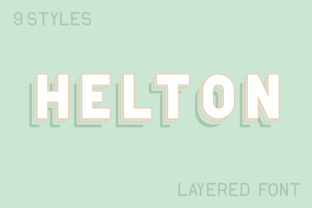
Helton is not a single font file but a family of coordinated styles that are meant to be used together. The core idea is that you can layer two or more of these styles—such as a solid fill, an outline, an inline, or a shadow variant—to produce a composite letterform with depth. Each layer is designed to align perfectly with the others, so the spacing, proportions, and baseline remain consistent across the entire family. This precision makes Helton unusually practical for designers who want multilayered effects without spending hours manually aligning separate vectors.
The aesthetic of Helton leans toward a clean, geometric structure with subtle humanist touches. It avoids extreme novelty, so the layered effects feel like a natural enhancement rather than a gimmick. This restraint is one of its strongest selling points: the font can be used in contexts where you need both complexity and professionalism, such as editorial headlines, logo development, or environmental signage.
How Helton Compares with Conventional Single-Layer Fonts
Most standard typefaces—think of a typical sans serif or serif—are designed as single-layer systems. You choose one weight (light, regular, bold) and use it across your text. The visual interest comes from size contrast, spacing, and color. Helton operates differently. By layering multiple weights or outlines, you create the illusion of beveling, shadow, or even a neon-like glow. This is a fundamentally different approach to building hierarchy and expression.
Here is a quick comparison of where each approach tends to work best:
- Single-layer fonts: Best for long-form reading, body text, UI, and situations where clarity and speed of recognition are paramount. They are also easier to work with in responsive web design because they do not require layering logic.
- Layered fonts like Helton: Best for headlines, logos, posters, packaging, and any display setting where you want a distinctive look. The tradeoff is that layered fonts typically require more deliberate spacing and may not perform well at small sizes.
If you are comparing Helton with a high-quality single-weight display font, consider your need for depth. A single bold font can be powerful on its own, but it cannot produce the same dimensional feel that Helton achieves through layering. On the other hand, if you need to set large blocks of readable text, a conventional book weight will almost always outperform Helton’s layered styles.
Strengths
Precision engineering. Because Helton’s layers are designed to stack precisely, you can achieve effects that would otherwise require hours of manual vector work. The alignment is built in, so you spend less time tweaking and more time composing.
Versatility in style. The family typically includes several variants—solid, outline, inline, maybe a shadow or a textured layer. This range lets you create everything from a subtle two-layer depth to a more dramatic three- or four-layer construction. You can also use only one layer if you prefer a clean, minimal look; Helton’s base face is attractive on its own.
Professional appearance. The geometric yet warm letterforms avoid looking overly technical or childish. This makes Helton suitable for brands in areas like fashion, technology, design firms, and creative agencies where a refined image matters.
Tradeoffs and Limitations
Not a body text font. Layered fonts work best at display sizes (typically 24pt and above). At smaller sizes, the layers can blur together or create unwanted moiré effects, especially on screen. If your project requires readable paragraphs, you will need a complementary body font.
Implementation complexity. In print, layering is straightforward: you stack the layers in your design software and adjust colors. On the web, layering may require CSS techniques like multiple text shadows or overlapping elements with different z-index values. This adds development time and can introduce performance or accessibility concerns if not handled carefully.
Limited versatility in color. While you can assign different colors to each layer, the overall design becomes more sensitive to color choices. A poor combination can muddy the depth effect. Designers should experiment with contrast—light over dark, or complementary hues—to maintain clarity.
Best-fit Use Cases for Helton
Helton shines in projects where the typography itself is meant to be a primary visual element. These include:
- Brand identity and logos. A layered logotype can convey complexity and attention to detail. Helton’s clean structure ensures the logo remains legible at small sizes while offering a unique signature in larger applications.
- Poster and editorial design. Headlines benefit from the depth. A two-layer Helton headline against a simple background draws the eye and can set the tone for the entire layout.
- Packaging. Product names, taglines, or ingredient highlights can use layering to stand out on a shelf. The tactile feel implied by the layers can suggest quality or craft.
- Digital hero sections. For landing pages or promotional banners, a layered heading can create a modern, high-end look. Just be sure to test legibility across screen sizes and resolutions.
When Helton May Not Be the Right Choice
No typeface is universally perfect, and Helton has scenarios where it may fall short. If your project is text-heavy—think a long article, a textbook, or a data-heavy report—Helton’s layered styles become impractical. In such cases, you need a font optimized for readability at small sizes, with generous x-height and even spacing. A standard serif or sans serif will serve your readers better.
Similarly, if your design relies on extreme minimalism, the added texture of layering may feel like clutter. A single-weight sans serif like Helvetica or Futura might give you the clean look you want without the extra dimension. Helton is best when you want the complexity; if you want simplicity, choose a simpler tool.
Another consideration is budget and licensing. Layered font families sometimes cost more because they include multiple styles. Helton’s pricing may be higher than a basic single-weight display font. Evaluate whether the layered effect justifies the investment for your project’s scope.
Decision Factors: How to Choose Between Helton and Other Options
When you are evaluating Helton alongside other layered fonts or even non-layered alternatives, consider these factors:
- Depth required. If your design needs a subtle shadow or a 3D-like appearance, Helton’s prebuilt layers save time. If you need fully custom 3D beveling, a dedicated 3D font or manual illustration may be better.
- Scale. For large headlines, Helton excels. For medium-sized subheadings, test at the intended size to ensure the layers remain distinct.
- Medium. In print, layering is easy. On the web, weigh the development effort against the visual reward. If your team is comfortable with CSS layering, it is feasible; otherwise, stick to a flat font.
- Brand tone. Helton’s geometric humanist style feels modern but not cold. It works well for creative and tech brands. For heritage or traditional brands, a more classic serif with shadow effects (like a woodcut style) might be more appropriate.
- Ecosystem. Helton may pair well with a sans serif body font like Open Sans or Lato. Consider the entire typographic palette before committing.
Practical Tips for Using Helton Effectively
To get the most out of Helton, start with a simple two-layer combination: a solid base and an outline layer slightly offset. This gives you a clean depth that is easy to color. You can then experiment with a third inline layer for more complexity. Always test at the actual size and medium you will output, especially if the layered effect involves color overlays or transparency.
When layering, pay attention to contrast. A light solid layer with a dark outline will read differently than a dark solid with a light outline. Invert the layers for different moods. Also, avoid using too many colors within the same letter; three layers with three contrasting hues can become chaotic. Often, two colors or a color plus black/white work best.
For web use, consider using CSS text-shadow for a single offset shadow as an alternative to true HTML layering. If you need multiple distinct layers (e.g., outline and inline), you may need to wrap each layer in its own and position them absolutely. This approach can affect loading and accessibility, so use it sparingly and provide fallback text.
Finally, remember that Helton is a tool for emphasis. Let it be the star of your composition. Surround it with plenty of breathing room and a restrained supporting typeface. Over-layering or combining Helton with other decorative fonts can quickly overwhelm the design.
Making an Informed Decision
Helton offers a unique blend of precision and aesthetic warmth for designers who want layered typography without the manual drudgery. It is not a one-size-fits-all solution, but for the right project—particularly display-oriented, brand-heavy, or detail-focused work—it can elevate the typography from functional to memorable. Compare it with your specific use case: if you need depth and have the medium to support it, Helton is a strong contender. If your priority is readability across long text or extreme simplicity, consider a conventional font family paired with subtle styling instead. By understanding both the strengths and the tradeoffs, you can choose the option that best serves your audience and your design goals.